Working Together to Tackle Stigma: Welcoming Jon Shorrock to the Anti-Stigma Network
We’re delighted to welcome Jon Shorrock to the Anti-Stigma Network Steering Committee. With more than 30 years’ experience across drug and alcohol services, Jon has been a passionate advocate for challenging stigma and improving outcomes for people who use drugs and alcohol.
In this short blog, Jon reflects on his journey through the sector, the many ways stigma continues to shape people’s experiences, and why collective action across systems is essential if we are to create meaningful change.

I was really chuffed to be asked to be a board member of the Anti-Stigma Network (ASN), partly because I know some of the great people that also sit on the board but mostly to further support a key ambition of mine to reduce stigma for people who use drugs and alcohol. I feel the ASN have developed a forum with the expertise to turn that ambition into reality.
I have been working in the field for over 30 years now. That probably makes me sound really old, which in some ways of course, I am! However, my energy to support better outcomes for some of the most marginalised and often misrepresented people has never waned. I am as passionate about this field of work and a keen advocate, as I was when I started working at HIT (Health Information and Training) Liverpool in the mid-90s. Starting with HIT in health promotion was a good place to start my journey proper in drugs and alcohol work. Liverpool being the birthplace of harm reduction had drug use firmly placed within a public health framework and with a human rights ideal. You may know the mirrored covered Cocaine leaflet produced by HIT, which was one of my achievements whilst working at HIT.
My next move meant that for the most part of my working life I have worked operationally with NHS providers providing specialist drug and alcohol services. In 1999, I started at an old E-Grade nursing level, in a non-registered role. I worked in Community Drug Team (CDT) in Kidderminster, Worcestershire. Back then, you did a bit everything; needle syringe programme, key working people on OST [as well as dexamphetamine prescribing for people using amphetamines] , supporting community detoxes, outreach, doing CCA’s for residential treatment places, transporting people to and from detox and rehab, prison visits and pick-ups, etc. It was a great way to ‘cut your teeth’ and I appreciated the breadth and depth of experience I gained quickly. I had to learn fast. Due to sickness issues in the team, I was given a caseload of 100 on day one!
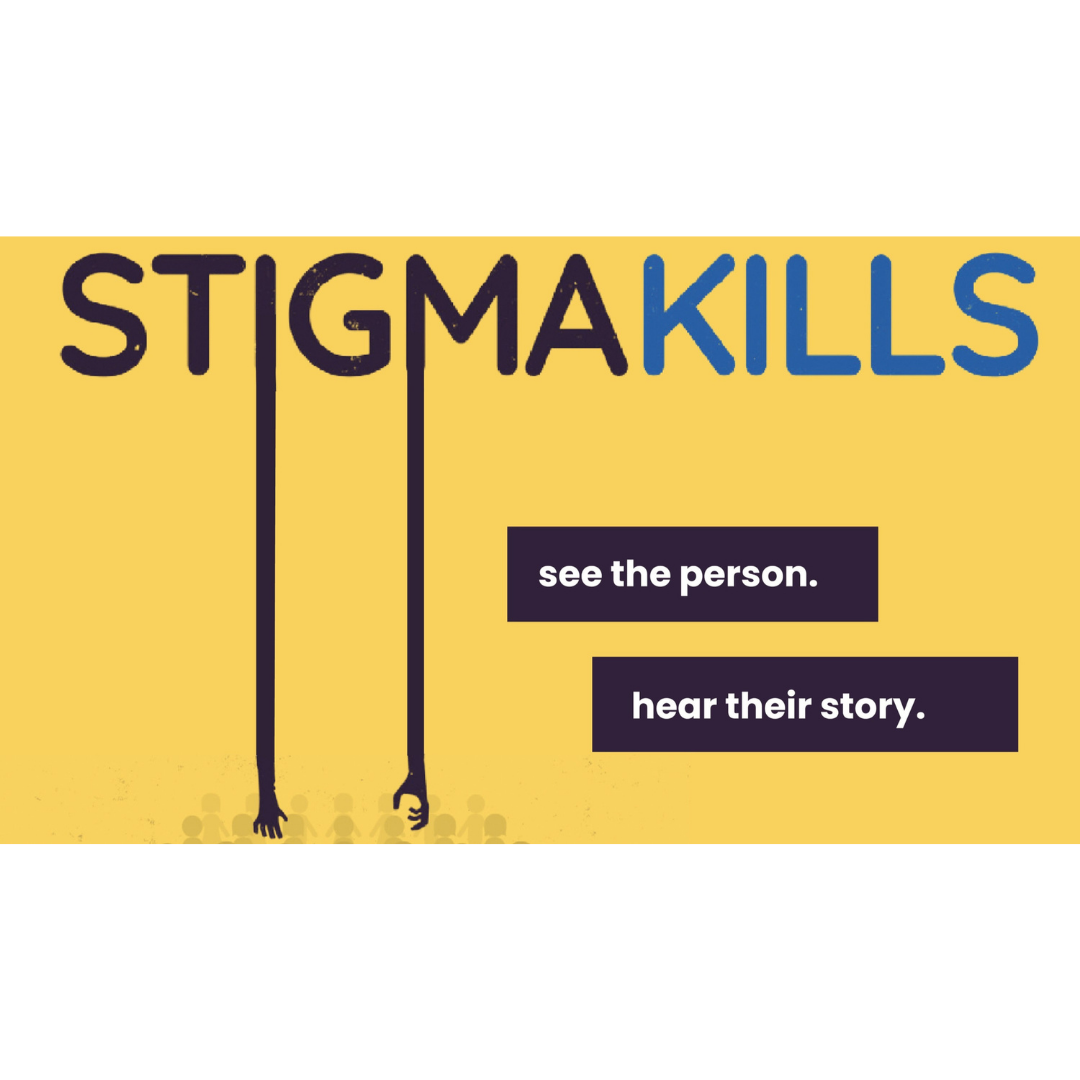
Since this time, I have moved from team leader, team manager and then service manager roles, mostly with the NHS. In these times I have developed effective community detoxification services, a nationally recognised shared care service, innovated OST delivery services through the pandemic, became a founder member of the NHS Addiction Provider Alliance [APA] and led a campaign to protect the remaining NHS Detox Units that was successful in helping to support the development of the current ring-fenced IPD grant. I was the main inspiration for the NHS APA in developing the ‘Stigma Kills’ campaign as I was keen for the APA to take some responsibility for shining a light on how stigma drives poor outcomes for people who use drugs and alcohol, and sadly how this includes premature death. This campaign has proven worthwhile and is a golden thread now of all that the APA does.
I’m also keen to support initiatives to reduce unnecessary premature deaths for people who use drugs and alcohol beyond traditional treatment services. I have driven messaging throughout the sector around the scale and risk of people using and dying alone and developing responses. I have supported the development of technology and non-technological solutions from monitoring and responding to overdose risks. In 2021, I established a network, ITSPOON [now, INOTEC] to bring together academics, service providers and other interested parties mostly from across the UK to share learning and collaborate to innovate and create solutions to prevent acute opiate-related deaths. The group remains active today and I have led and contributed to research proposals involving wearable oximeters and drones.
In 2021, I moved to work for central government for 3 enjoyable years where I learnt a lot about the machinations of government. During that time, I was able to influence various aspects of the government’s agenda, however the one I am most proud of is enabling stigma to be a key part of the governments strategy to reduce deaths. I enabled this by bringing a stigma intervention from Australia to be adapted and used in the UK. It was no mean feat supporting a collaborative commissioning arrangement! And I am so pleased to say that the work is now taking place across numerous ADDER sites across the country, led by Liverpool John Moores University. This is great news but there is still much work to do to reduce stigma in government departments that still preside over stigmatising policies and objectives.
In my current role as the partnership lead in Staffordshire, we are delivering drug and alcohol treatment and recovery services through a highly ambitious s75 agreement. Using what I have learnt I have created a local Anti-Stigma Forum, which is a sub-group with representation from across the system and a mission to focus on reducing organisational stigma. I am grateful that the ASN will be supporting this work programme and I feel strongly that where stigma is addressed most effectively is at a system and place level.
I have throughout my career witnessed the subtle and overt ways that stigma towards people who use drugs and alcohol manifests itself; from the eye roll of the GP surgery receptionist to incredulous statements such as “you’ve only brought this upon yourself” and of course, much worse. I have seen how this impacts on people’s ability to use mainstream services or engage with their communities. At times, I have struggled with how to challenge stigma and discrimination when I have seen or heard it. The truth is, it is often not easy and a direct challenge in a public meeting is not always the best way to support better understanding for people and can even be counterproductive. Over time, I have become more confident in my approach and lent more towards methods of ‘calling people in’ than calling people out. However, there are times when the latter is required but it does need careful consideration before exercising!
There are of course no simple solutions to address all of the forms of stigma, as stigma is complex and has a lot of intersectionality. Like anything though, if enough people work collectively across our systems and through government, real change can occur. There is a lot to do but I am excited about what can be achieved in the coming months and years of working with the ASN and others.
Jon Shorrock, Section 75 partnership lead for Staffordshire Council, the newest member of the Anti-Stigma Steering Committee.